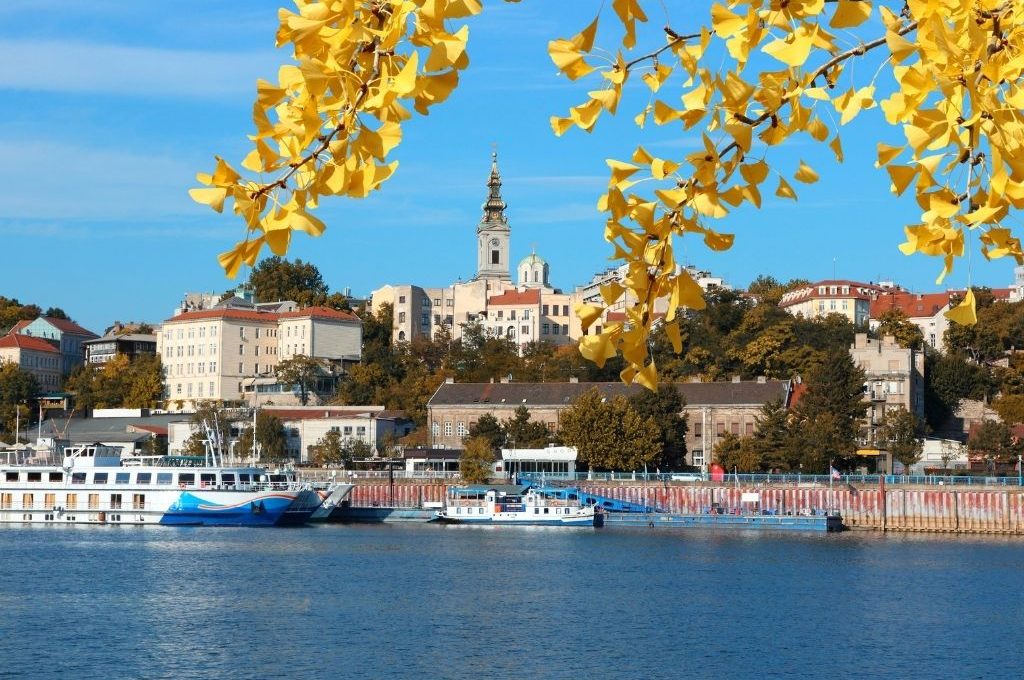
Belgrade, the jewel of the Balkans, is a city steeped in history yet vibrant and lively. It is not only the capital of Serbia but also a place where emperors have left their mark, artists have found inspiration, and cultures and nations have intertwined. It has been home to many notable figures, from Yugoslavia’s founder Tito to Nikola Tesla, Nobel Prize-winning writer Ivo Andrić, and director Alfred Hitchcock. We will see these traces sometimes on a street sign, sometimes on the stones of a cathedral.
️ Reminder: To explore Paris step by step with your digital tour guide, don’t forget to download Piri Guide!
Where is Belgrade?
Belgrade is the capital and largest city of Serbia. It is located at the confluence of the Sava and Danube rivers, in the northern part of the country. It lies in the north-west of the Balkans, at the intersection of Central Europe and South-Eastern Europe.
When to Visit Belgrade?
The best time to visit Belgrade is in spring and autumn. From April to June and September to October, the weather is generally mild and pleasant. Summer months can be hot and sometimes stifling, but festivals and outdoor events bring the city to life.
Winter is cold and sometimes snowy, but the decorations and events during the Christmas and New Year period add a special atmosphere to the city. If you are looking for a quieter and more affordable trip, spring and autumn are the best times to visit Belgrade.
Must-Visit Places in Belgrade
We’ve made a list of must-visit places in Belgrade. Yet, we should remind you that you can find more on Piri Guide mobile app. Piri Guide detects your location, offers you the best travel routes, and starts telling you the hidden stories of wherever you are. All you have to do is to get your headphones or earbuds and follow the path at your own pace. Then, don’t set out for your trip before downloading the digital travel guide!
Nikola Tesla Museum
Nicola Tesla was a Serbian-American scientist, engineer and inventor who lived in the 19th century. He never actually lived in Serbia. He carried out most of his work in New York, where he died. However, despite never having lived in Serbia, he is a source of pride for the country. Contrary to popular belief, the museum building has no connection to Tesla’s life. After his death, his belongings were brought to Belgrade by his nephew.
Inside the museum, you will see Tesla’s personal belongings, such as his clothes, medals and decorations, as well as his library and art collection. The art collection consists mainly of gifts from his admirers, design drawings and a few cartoons. In addition, Nikola Tesla’s ashes are also on display inside a sphere.
St. Sava Cathedral
St. Sava Cathedral is one of the largest Orthodox churches in the world. St. Sava was the founder and first archbishop of the Serbian Orthodox Church. He lived in the 12th century. He was actually a prince of the Serbian royal family. Today, he is known as the son of Serbia in Serbia.
St. Sava’s church is a true story of patience and resistance. It was first planned to be built in 1894, but the Balkan Wars and then World War I disrupted the plans. Construction resumed in the 1930s, but this time World War II and Nazi bombings halted the project. The dome was finally completed in 1989. Even today, when you step inside, you will see that the church is still unfinished.
Skadarlija
Skadarlija is the best place to experience Belgrade’s bohemian spirit. This street, which became a meeting place for artists in the late 19th century, was actually a neighbourhood where Gypsies lived at the beginning of the century. Over time, merchants and artisans settled here. Not only artists, but also writers and poets gathered here for years. That’s why Skadarlija is also known as ‘Belgrade’s Montmartre.’
However, the large buildings constructed over time disrupted this unique atmosphere. Fortunately, a comprehensive restoration in the mid-1960s restored Skadarlija to its current nostalgic atmosphere. Today, the street is home to second-hand shops, small galleries, and colourful old buildings.
Belgrade Fortress
Belgrade Fortress is located at the highest point of the city and showcases not only the history of Belgrade but also that of the whole of Serbia. It has been destroyed and rebuilt many times since the Neolithic Age. The first settlers were the Celts, followed by the Romans, Byzantines, Ottomans and Austrians, all of whom left their mark on the fortress. Today, as you walk through the castle, you can follow the layers of thousands of years step by step.
This hill, which overlooks the confluence of the Sava and Danube rivers, has been a military headquarters, a castle, and a city for centuries. As you walk through the park inside, you can see Ottoman tombs, Austrian-era gates, and statues dedicated to Serbian history all in one place. Especially if you climb to the castle’s towers at sunset, you will understand much better why Belgrade is called the “White City.”
Knez Mihailova Street
Belgrade’s Istiklal Caddesi, or Independence Avenue, takes its name from Prince Maykıl, or Knez Mihailova, after Prince III Mihailo. Today, it is one of the city’s main streets and is always bustling with activity. The area’s history dates back to Roman times. During the Roman period, a main road known as Via Cardo passed through this street. For this reason, the street has been protected by UNESCO. Today, the homes and offices of Belgrade’s wealthy residents are located here.
Walking among the beautiful buildings on the street is a pleasure, so we highly recommend taking a stroll here. The Zepter Museum, located on the street, should also be on your list. The museum exhibits works by contemporary Serbian painters and sculptors. If you are interested in contemporary art, don’t miss it!
If you are looking for more destination inspiration, we have listed the best summer destinations of in Europe here.