Nara is one of Japan’s most charming cities. It is not only the country’s first capital, but also a place where tranquillity, nature and history-steeped temples converge. With deer roaming freely in its parks, lush greenery and serene atmosphere, Nara is a city that warms the heart. While walking here, it’s only a matter of time before you come face to face with a deer or stand quietly in a temple, lost in thought. This city also hosts the first traces of Buddhism in Japan.
️ Reminder: To explore Paris step by step with your digital tour guide, don’t forget to download Piri Guide!
Where is Nara?
Nara is located in Japan’s Kansai region, right between Kyoto and Osaka. It takes only 45 minutes by train from Kyoto and about 40 minutes from Osaka. So, in just a short journey, you find yourself in a completely different atmosphere. It’s a great getaway for those who want to escape the hustle and bustle of big cities and find some peace and quiet.
How to Get to Nara?
The easiest way is to take the train from Osaka or Tokyo. You can reach it via the JR Nara Line or the Kintetsu Nara Line. The Kintetsu station is closer to the city centre; you can easily walk to the temples and the park. The JR station is a bit further away but still within walking distance.
If you plan to travel by train in Japan, consider getting a Japan Rail Pass. It is reasonably priced, and train travel in Japan is a pleasure in itself.
The Best Season to Visit Nara
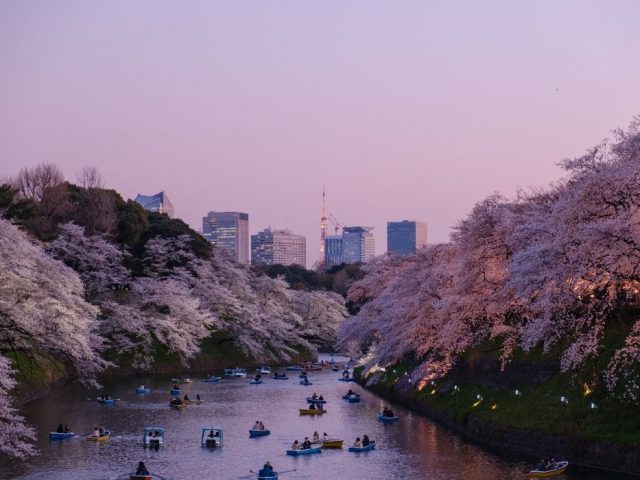
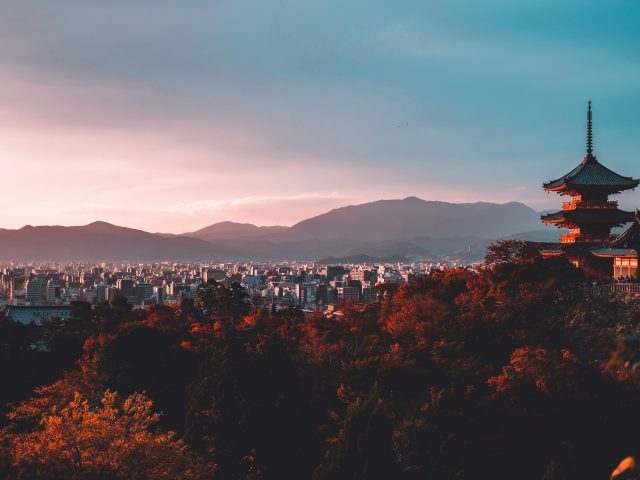
Nara is beautiful all year round, but spring and autumn are particularly delightful. At the end of March and beginning of April, it transforms into a pink and white fairy tale with cherry blossoms. In November, red and golden yellow leaves paint the area around the temples in a mesmerising colour. In summer, its lush green landscape offers tranquillity, while in winter, if it snows, the temples become a romantic white wonderland. And don’t worry, the deer are there all year round!
Must-Visit Places in Nara
We’ve made a list of must-visit places in Nara. Yet, we should remind you that you can find more on Piri Guide mobile app. Piri Guide detects your location, offers you the best travel routes, and starts telling you the hidden stories of wherever you are. All you have to do is to get your headphones or earbuds and follow the path at your own pace. Then, don’t set out for your trip before downloading the digital travel guide!
Higashimuki Shopping Street
Higashimuki means ‘facing east’. The reason for this is the location of the nearby Kofukuji Temple. In the 16th century, the houses here were built on the west side, facing east towards the temple. That is why the street is called Higashimuki. On Higashimuki Shopping Street, you will find traditional craft shops and restaurants serving local delicacies.
You can find all kinds of flavours from the city’s cuisine here. For example, be sure to try the famous kakinoha-zushi, unique to Nara. One of the most special things you can try here is mochi, the famous Japanese rice cake. The mochi dough, made from rice flour and starch, is pounded to prepare it. The country’s fastest mochi makers are also in Nara. A small warning: make sure you have cash in Japanese yen with you! Some shops and restaurants do not accept cards.
Kōfuku-ji
Kōfuku-ji is one of Japan’s oldest and most famous Buddhist temples, with a history spanning over 1,300 years. It is the head temple of the Hossō sect of Buddhism. The history of this temple actually dates back much further. Princess Kagami built a temple in Kyoto in 669 to pray for her politician husband’s recovery from an illness. She often visited this temple to pray. However, her husband passed away that same year. The temple was moved to the Umayasaka area of Nara in 672. After Nara was established as the capital in 710, the temple was moved here.
The temple has been destroyed by fire many times. There were even periods when it lost its power because of this. The pagoda was last built in 1426. You cannot enter it. To enter the East Golden Hall, located to the left of the pagoda, you need to buy a ticket. This hall houses a large statue of Yakushi Buddha. Yakushi is the Buddha of Medicine and Healing in Buddhism. His name means “medicine teacher”. The hall also displays works of Buddhist art. A little further on from the East Golden Hall is the National Treasure Museum. Admission is also charged there, and the temple’s art collection is on display. The most important work in the museum is the statue of Asura, the three-faced, six-armed demigod of Buddhism.
Yoshikien & Isuien Gardens
This is one of Nara’s most beautiful Japanese gardens. Yoshikien takes its name from the Yoshikigawa River that flows beside it. There are three types of Japanese garden at Yoshikien: a pond garden, a moss garden and a tea ceremony garden. This means it is a place where you can see three different gardens in one location. The pond garden, or chisen-style garden, has a design dating back to the Edo period. It brings together the gentle slopes and curves of the terrain. There is a pond in the centre. The stepping stones are also placed according to tradition.
The moss garden takes its name from the hair moss that covers the entire garden like a green carpet. Known as kokeniwa, this garden style is particularly stunning during the rainy season when the moss comes to life. There is also a tea ceremony garden, or cha-niwa. This garden is dedicated to the Japanese tea ceremony, performed with special tools and rituals. Here, too, you will see seasonal flowers and plants. The main focal point, however, is the thatched tea house.
Nara Park
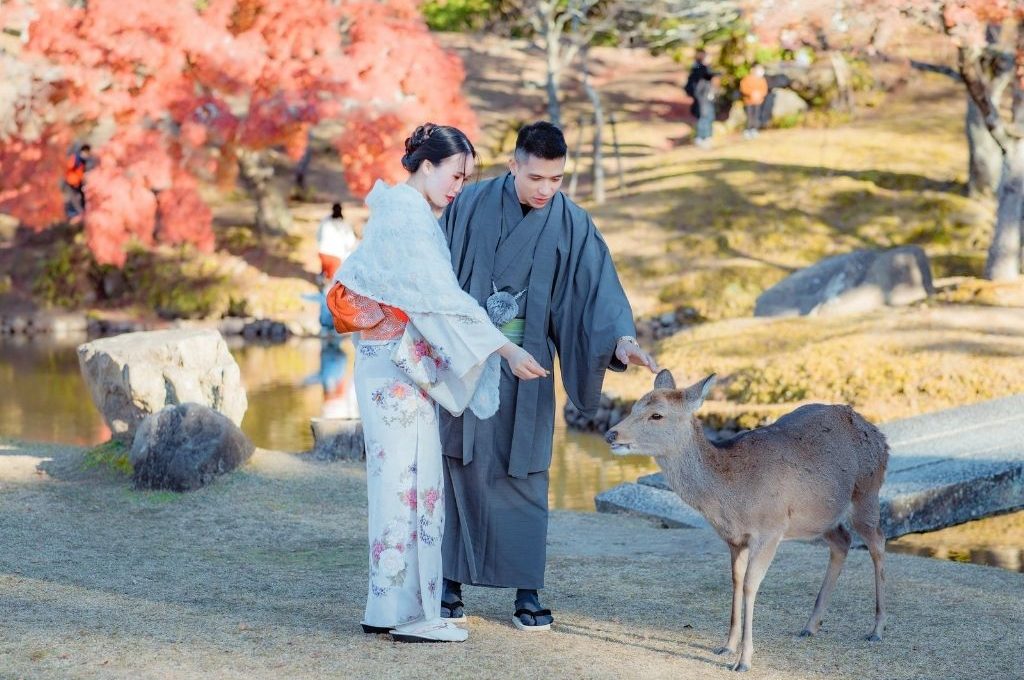
Today, this park is one of the first places tourists visit in Nara. This is because it is not just a park with trees and flowers. It is so large that Todaiji and Kofukuji Temples, Kasuga Taisha Shrine and Nara National Museum are located within the park grounds. But the park’s most important feature is, of course, the deer. Nara’s deer have become a symbol of the city. Because they are precious, you cannot feed them with just anything. Rice crackers called shika-senbei are sold throughout the park. You can buy them and feed the deer.
The park is located at the foot of Mount Wakakusa. A lake with turtles and koi carp is also located in the centre of the park. The park also features traditional tea houses and snack and souvenir kiosks.
Every city in Japan tells a different story. If Nara is the city of tranquillity, Kyoto is the heart of old Japan. Be sure to check out our Kyoto Travel Guide to discover more.